Study Methods
Does Listening to English While Sleeping Help You Learn?
Does listening to English while sleeping help you learn the language? The honest answer is more nuanced than the internet suggests. You cannot absorb new vocabulary in your sleep, but the right kind of audio can reinforce what you already know. Here is what the research actually shows.
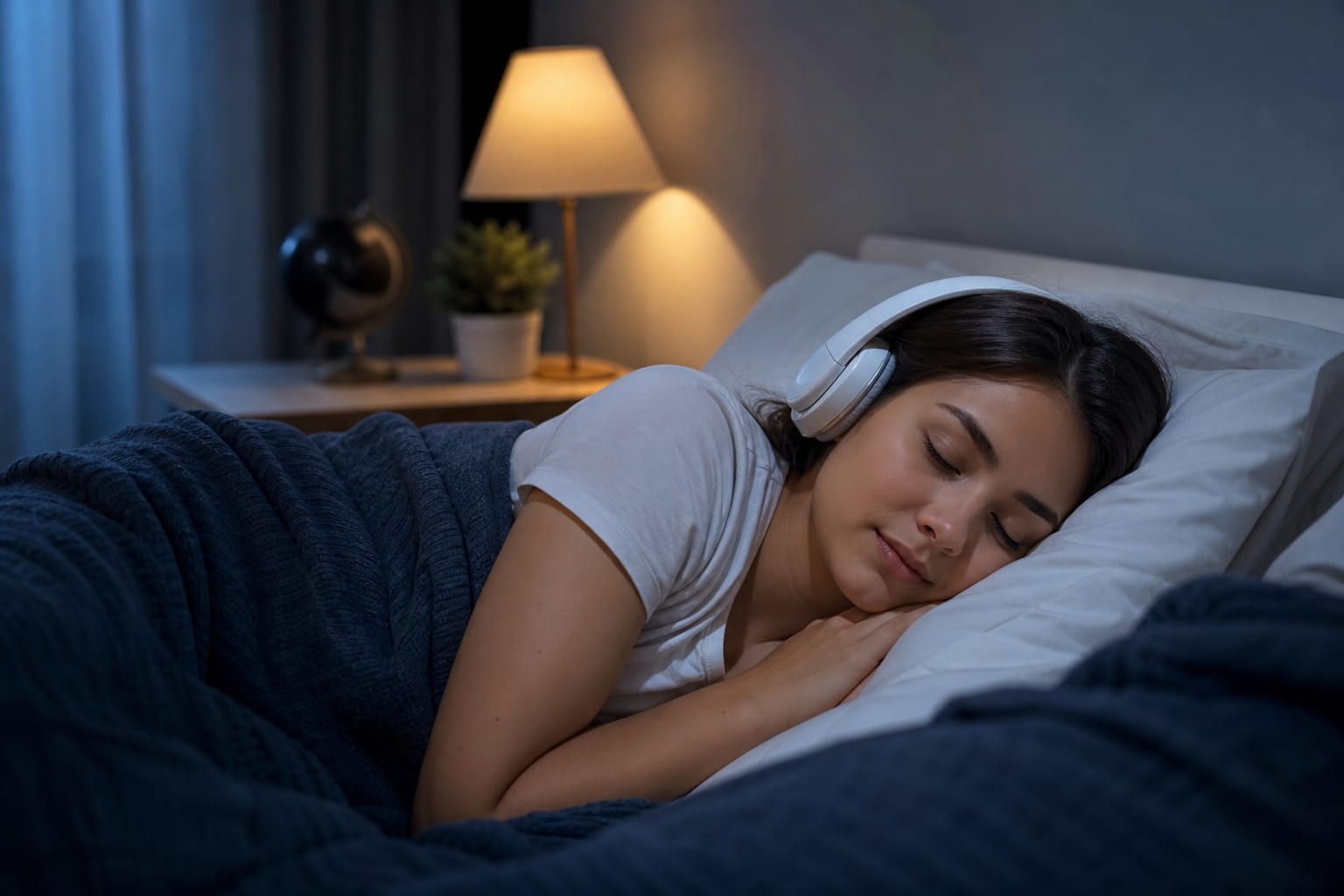
What the research actually says about sleep learning
In 2014, researchers at the University of Zurich tried something that sounds like a shortcut from a late-night infomercial. They taught German-speaking adults new Dutch words, then played some of those words back while the participants slept. The next morning, the words that had been replayed during sleep were recalled significantly better than the ones that had not.
That result made headlines and launched a thousand "learn a language in your sleep" products. But the study contained a detail most of the coverage skipped: the participants had already learned the words before they went to bed. The sleep audio did not teach them anything new. It strengthened what was already there.
This is the core of the honest answer to the question, does listening to English while sleeping help. Sleep can consolidate and reinforce, but it cannot introduce. The brain during sleep is busy replaying and sorting the day's experiences, not filing new information into long-term memory. Research on sleep-dependent memory consolidation consistently shows that sleep replays existing memory traces rather than encoding fresh ones.
Why new words need a waking brain
Learning a word is not a single event. It is a chain of steps: you perceive the sound, you connect it to a meaning, you use it in a sentence, and then your brain files the connection for later. Several of those steps require conscious attention, and conscious attention is exactly what sleep switches off.
During deep sleep, the brain's memory systems are not open for new business. The hippocampus, which handles new encoding, is largely offline while it coordinates replay with the cortex. This is why people who fall asleep to an audiobook in a language they have never studied wake up knowing none of it. The sound may even influence them in subtle ways, but it does not become vocabulary.
A telling 1960s experiment by Charles Simon and William Emmons had participants sleep through lists of facts and questions, then tested them the next day. When the participants were genuinely asleep, measured by EEG, they remembered nothing. Only when the audio woke them briefly did any learning occur. Their EEG-monitored sleep learning studies remain the classic demonstration that true sleep blocks new encoding.
So if you have been drifting off to a podcast of English you do not understand, hoping it will soak in, the evidence is against you. The time is not wasted, but it is not learning either.
Does listening to English while sleeping help with what you already know?
None of this means sleep is useless for language learners. It means the useful part happens on the other side of the equation: consolidation.
When you study vocabulary during the day, the memory trace is fragile. Sleep is when the brain decides what to keep and what to discard, replaying important traces and strengthening the connections that support them. Playing audio of words you have already studied during sleep appears to bias that replay process toward those words, which is why the Zurich participants recalled the replayed words better.
There is a second, quieter benefit that has nothing to do with memory science. Many learners find that falling asleep to familiar English, a story they know, a slow conversation they can mostly follow, lowers their anxiety about the language. The sound becomes comfortable rather than threatening. That is a real effect, but it is emotional, not linguistic. A tool like Tutoro can help you build that familiar material in the first place, since its lessons give you words and phrases you have already met and used, which is exactly the kind of audio worth replaying at night.
The distinction matters because it tells you what to play. Unfamiliar material does nothing while you sleep. Familiar material, words and phrases you have met and used, gets a small but measurable boost. The more you have already learned the word, the more sleep audio can reinforce it.
How to use sleep audio without wasting your time
If you want to use sleep audio honestly, here is the method that matches the research.
First, study your vocabulary properly while awake. Learn the word, see it in a sentence, say it out loud, and ideally produce it yourself in a conversation. This is the part that cannot be skipped. Second, choose audio that contains those exact words you studied that day, not new material. Third, set it to play quietly during the first part of the night, when slow-wave sleep is most concentrated, and keep the volume low enough that it does not wake you. Waking up repeatedly costs you more in lost sleep quality than the audio gives back.
The honest framing is that sleep audio is a small multiplier on work you have already done, not a substitute for it. A learner who studies for twenty minutes and then plays familiar audio at night will likely retain more than one who studies for twenty minutes and does not. But a learner who skips the studying and only plays audio at night retains nothing.
This is where the waking work matters most. To have words worth consolidating, you need to have met them, understood them, and produced them first. One practical way to do that daily is a short conversation in English before bed, even a few messages back and forth, so there is something fresh for your sleeping brain to replay. English speaking practice with AI gives you a conversation partner available at any hour, which fits the evening routine this method depends on.
What actually moves your English forward
If sleep audio is a small multiplier, what is the main lever? The answer is unglamorous: active, effortful practice while you are awake, especially producing the language rather than only hearing it.
Listening is essential, but it is input. Speaking and writing force you to retrieve words and assemble them, which is the process that builds durable memory. Research on the "testing effect" shows that retrieving information from memory strengthens it far more than re-reading or re-listening to it. Decades of retrieval practice research make this one of the most robust findings in learning science. Your sleep audio can only reinforce what retrieval practice has built.
This is also why passive methods feel productive while delivering little. Watching a show with subtitles, replaying a playlist, falling asleep to English radio, all of these are comfortable. They ask nothing of you. The uncomfortable part, speaking, writing, being corrected, is where the growth actually happens.
Tutoro is an AI English tutor you talk to in a messenger-style conversation, and it is built around the principle that producing language is what makes it stick. Each lesson runs inside the chat: the tutor introduces words with photos and audio, asks you to use them, and reads your replies, then brings weak words back on their own days later so they consolidate rather than fade.
It suits learners who will actually type and speak during a lesson, and it is not much use to anyone who only wants to listen passively, because that is precisely the habit it is designed to move you past.
Frequently asked questions
Can you learn new English words in your sleep?
No. The evidence is consistent that the sleeping brain does not encode new information. Experiments using EEG monitoring show that participants who are genuinely asleep remember nothing from audio played to them. Only words already learned before sleep can be reinforced by replaying them during the night.
What kind of audio should I play while sleeping to learn English?
Play audio containing words and phrases you have already studied and used that day. Familiar material gets a small consolidation boost; unfamiliar material does nothing. Keep the volume low enough not to wake you, and play it during the early part of the night when slow-wave sleep is deepest.
Is listening to English while sleeping a waste of time?
Not entirely, but it is a poor use of time compared to active practice. It can slightly strengthen vocabulary you already know and can make English feel more familiar and less stressful. But it cannot replace studying, speaking, and writing while awake, which are where the real gains come from.
How can I actually improve my English listening and speaking?
Practise actively and produce the language yourself. Listen to material you mostly understand, then speak and write using the words you met. Retrieving words from memory strengthens them far more than hearing them again. A short daily conversation in English, even a few messages, builds the vocabulary that sleep can then consolidate.
Does the time of day I study matter for sleep learning?
Yes, studying shortly before bed appears to help. Material learned in the evening is replayed and consolidated during the night's sleep, and playing familiar audio of that material during sleep can reinforce it further. Morning study works too, but the evening-before-sleep window aligns naturally with consolidation.
Common questions
Can you learn new English words in your sleep?
No. The evidence is consistent that the sleeping brain does not encode new information. Experiments using EEG monitoring show that participants who are genuinely asleep remember nothing from audio played to them. Only words already learned before sleep can be reinforced by replaying them during the night.
What kind of audio should I play while sleeping to learn English?
Play audio containing words and phrases you have already studied and used that day. Familiar material gets a small consolidation boost; unfamiliar material does nothing. Keep the volume low enough not to wake you, and play it during the early part of the night when slow-wave sleep is deepest.
Is listening to English while sleeping a waste of time?
Not entirely, but it is a poor use of time compared to active practice. It can slightly strengthen vocabulary you already know and can make English feel more familiar and less stressful. But it cannot replace studying, speaking, and writing while awake, which are where the real gains come from.
How can I actually improve my English listening and speaking?
Practise actively and produce the language yourself. Listen to material you mostly understand, then speak and write using the words you met. Retrieving words from memory strengthens them far more than hearing them again. A short daily conversation in English, even a few messages, builds the vocabulary that sleep can then consolidate.
Does the time of day I study matter for sleep learning?
Yes, studying shortly before bed appears to help. Material learned in the evening is replayed and consolidated during the night's sleep, and playing familiar audio of that material during sleep can reinforce it further. Morning study works too, but the evening-before-sleep window aligns naturally with consolidation.


